Friday, 15 November 2013

Old Panjang puerh tea

Old Panjang is a district in Yunan that produces the world famous old panchang puerh tea. With its strong flavour and taste, it is reputed to be the king of puerh in Yunan. As the tea is harvested from very old puerh trees (more than 700 years old) in the the Panjang district, it has a very high price tag. Moreover, the tea production is monopolized by a company (Chen Shen Tea Factory) founded by a certain Mr Chen. Newly made old panjang tea from the factory can cost several thousand dollars (RMB). Mr Chen was able to persuade over 90% of the local tea farmers to sell their raw tea leaves to his company and he has been the major supplier of good quality old panjang puerh tea in China.

Manufacture in 2003 from green panjang puerh leaves
Below is the photo showing some old panjang tea made in 2003 in a factory in Menghai, prior to Mr Chen's involvement in this region. It came with a card (inside the box) explaining the attributes of the tea.
Little card providing info on the panjang tea


Old Toucha

Toucha is compressed puerh tea in the shape of a bowl.

Below are 2 toucha (250 g) manufacture in the 1960s from green puerh tea. The tea has great medicine value due to its age.

Guangdong big toucha of the 60s
This type of tea is rare in the market as it was manufacture more than 50 years ago.

Guangyun toucha of the 80s

Tuesday, 12 November 2013

Early Teapots of Yixing Factory

These early teapots of Yixing factory have a common characteristic, they usually bear the mark of "China Yixing" at the bottom of the teapots. Some may have the name of the potters engraved at the back of the teapot lids. There are some teapots with no name of the potters at the back of the covers. So it is impossible to track who the potters were. During those days, teapots were made for the sole reason of brewing tea and not as collectible items of art and craft. There was no desire to promote the potters. As a result, some very good Yixing teapots had no potters' names on them. It was also against national interest to promote of glorify individual potter.

Of course today, people collect Yixing teapots for many reasons. Apart from using the teapots as utensils to brew tea, they also hope that one day their teapots can fetch a good price because of the fame of the potters. Every collector knows that although the Yixing clay is expensive, the real value of a teapot depends a great deal on the fame of the potter who crafted it.
 
A good teapot with no name on it


This one had the potter's name on its lid

This teapot with "China Yixing" mark at the bottom

Saturday, 12 October 2013

World Cup 1966

Every four years, all nations of the world compete vigorously to win the most prized trophy on earth, the world cup. Some nations won the cup twice, other nations could not even qualify to compete in the finals let alone winning the cup.

England with all the glamour and publicity surrounding her soccer players and the EPL, managed to win the cup once. That was in 1966. There was a set of stamps issued in the UK in 1966 commemorating this occasion. Can you remember who were the players of this England team that won the world cup?


World Cup Winner 1966

Stamps on Vietnam war

Not many youngsters nowadays know about the Vietnam war and the reasons why there was such a war and which countries  were involved in the war.

China supported North Vietnam during the war and the Americans were on the side of South Vietnam (just like the North and South Koreas saga). As China during those years like to us propaganda to promote their ideology, it was inevitable that the country issues stamps in support of the North Vietnam people to fight off the influence of the imperialists (so to say).
Stamp showing North and South Vietnam
Here there is a set of such stamps that showed the Chinese people were behind the North Vietnamese in their fight against the Americans who were depicted as the invaders/intruders. The war was finally ended with the withdrawal of the American troops from North Vietnam. Eventually the north and south regimes reconciled and the whole country was again united as one.
In support of the Vietnamese against the Americans' intrusion

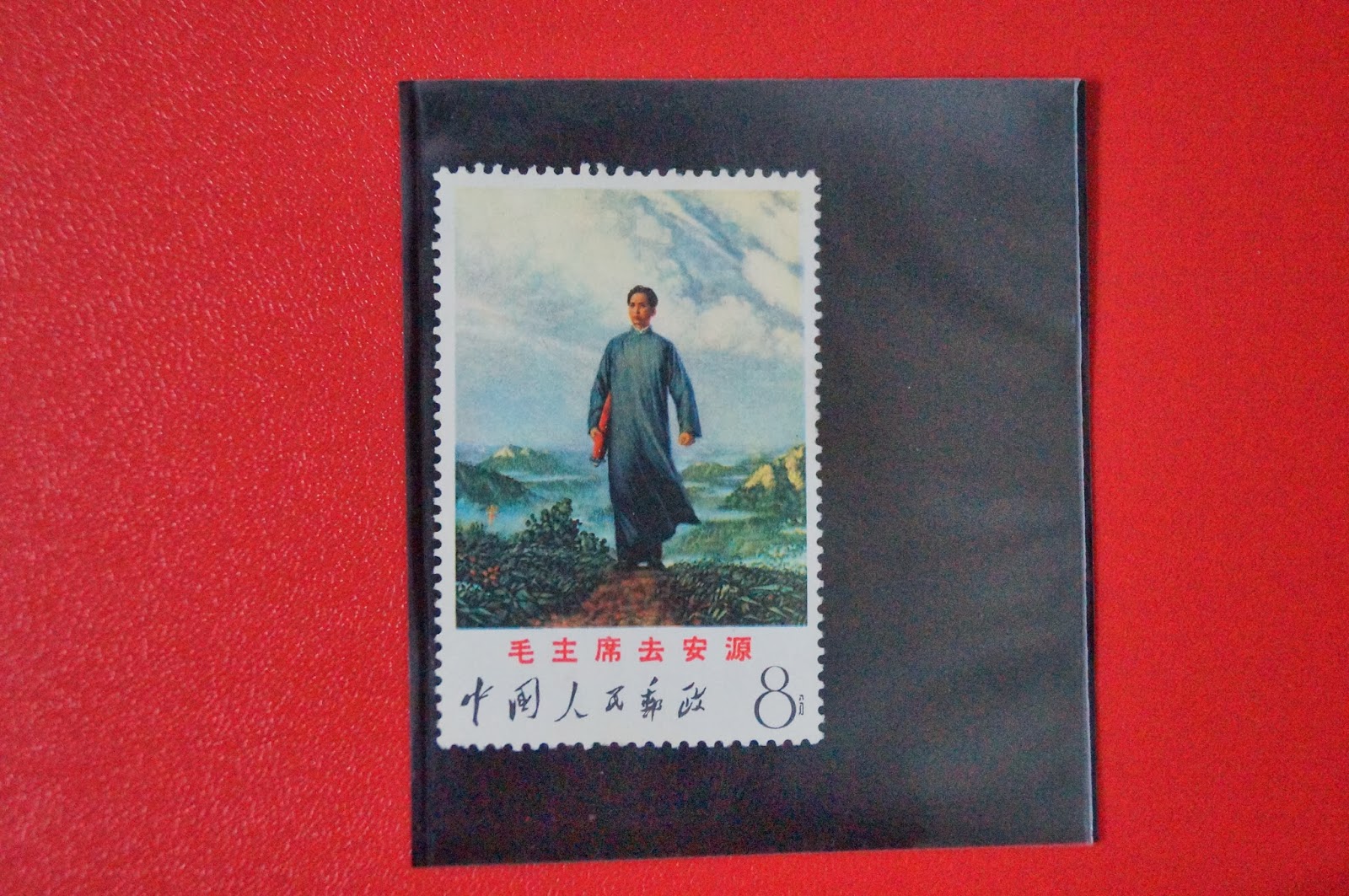
Rare stamp of Chairman Mao

Old stamps of China generally can fetch a good price in the market as these stamps are sought-after items world wide. Stamps issued during the early 1960s are especially valuable due to their scarcity. The stamps were generally well printed and attractive in terms of colour used and design features. The stamps depicting Chairman Mao are in high demand due to the history/stories of the revolution period.

Here is a stamp depicting Chairman as a Scholarly figure (he was once a school teacher) visiting a town and carrying an umbrella.
Chairman Mao visiting Anyen

Three legged teapot

Yixing teapots made in the early 1980s are characterised by good workmanship and low cost. Generally if the teapots came from the Yixing factory, it was not important to know who made the teapots as long as they were purchased for brewing tea. Moreover, majority of the people who bought the teapots in the early days did not have much information regarding the potters. Looking back at the pots one collected over the years, sometimes one may get to own some good teapots made by craftsmasters of today's fame. This is possible as these craftsmasters all have a humble beginning, they all started out as apprentices in the factory and rose through the rank to become craftsmasters of Yixing. The whole process may take over 20 years of hard work for a potter to gain recognition as a renown potter.

There is a three legged teapot made in the early 1980s (the green sticker generally reveals that the teapot was made before Yixing factory adopted the official logo of the square-and-round label) which is of a high standard in terms of workmanship and the zisha clay used. The maker was later found to be a certain Zhou Linghua, an old potter who was active in the 1980s in the factory.

Three legged teapot by Zhou Linghua